
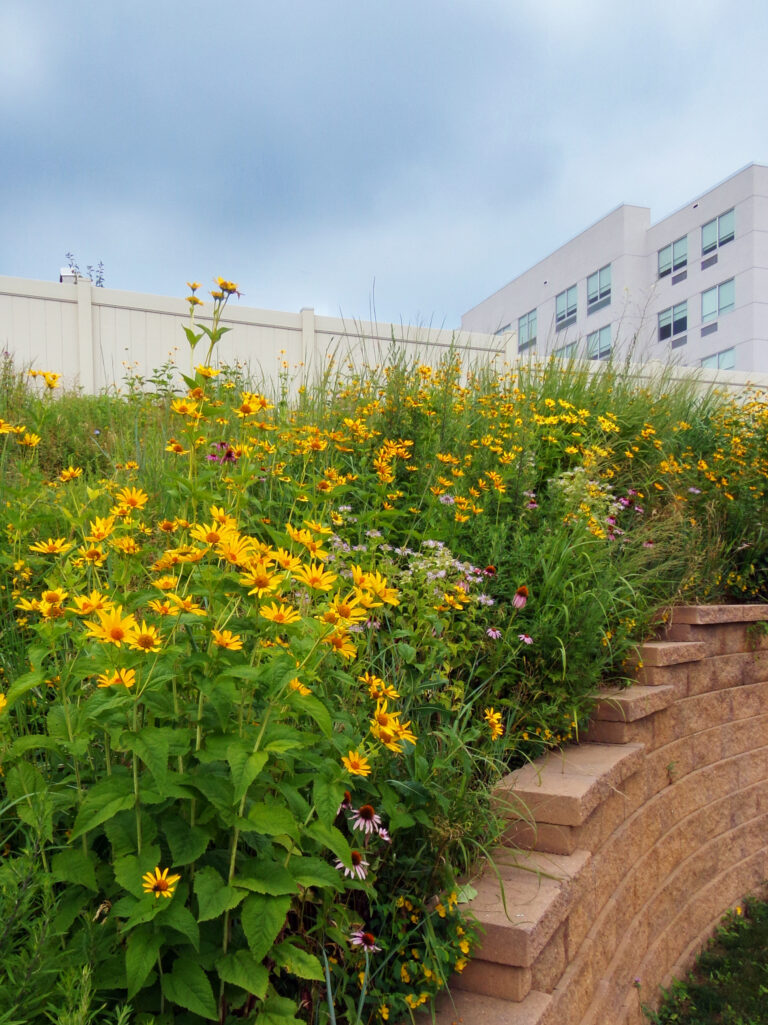
Pollinator populations depend heavily on the availability of flowering plants and suitable habitat across the landscape. However, habitat loss, simplified landscapes, and reduced plant diversity have made it harder for bees, butterflies, and other pollinating insects to find the resources they need throughout the growing season.
Designing effective pollinator landscapes can help restore those resources while strengthening the ecological value of farms, gardens, parks, and restoration sites.
In this guide, you will learn how to:
- Select native plants that provide reliable nectar and pollen
- Design pollinator landscapes with season-long bloom
- Incorporate habitat features that support nesting and overwintering
- Use larger plantings and seed mixes to improve pollinator habitat
The following sections outline the key principles for designing productive pollinator landscapes.
What Makes a Landscape Pollinator-Friendly?
A successful pollinator landscape gives pollinators reliable access to nectar and pollen across the growing season while also offering the shelter and breeding conditions many species need to survive.
Focus on Three Essentials
- Diverse flowering species to support a wider range of pollinators
- Season-long bloom, so food is available from spring through fall
- Native plants and habitat features that match local ecological relationships
This matters because not all pollinators use the landscape in the same way. Some species can forage broadly across many flowers, while others are more specialized and depend on a narrower set of plants. A planting with only one bloom period or only a few ornamental species may look attractive to you, but still leave major gaps in habitat value.
Which Native Plants Work Best in Pollinator Landscapes?
Plant selection is one of the most important decisions you will make when designing pollinator landscapes. Native species tend to provide the most reliable nectar and pollen resources because they evolved alongside local pollinators. They also tend to perform better in regional soils and climate conditions.
When you design your planting, focus on seasonal bloom succession. Your goal is to provide a mix of flowers from early spring through late fall so pollinators can find consistent food throughout their life cycles.
Early-Season Flowers (Spring)
Early bloomers support emerging native bees that begin foraging when few plants are in flower.
- Eastern Columbine (Aquilegia canadensis)
- Golden Alexanders (Zizia aurea)
- Tall White Beardtongue (Penstemon digitalis)
These plants are especially valuable to native bees and butterflies and often serve as focal species in pollinator meadows.
Late-Season Flowers (Late Summer to Fall)
Late blooms help pollinators build energy reserves before winter.
- Goldenrods (Solidago species)
- Asters (Aster)
- Oxeye Sunflower (Heliopsis helianthoides)
Including these species helps ensure your pollinator landscapes remain productive well into autumn.
How Do You Design Pollinator Landscapes That Provide Food All Season?
Selecting good plants is only the first step. The way you arrange those plants ultimately determines whether your pollinator landscape provides reliable food throughout the year. A thoughtful planting plan helps pollinators move easily between flowers and ensures nectar and pollen remain available as the seasons change.
If you want your landscape to function well ecologically, focus on three practical design strategies.
1. Plan for continuous bloom
Pollinators rely on a steady sequence of blooms rather than a single burst of flowers. When early-season plants like Aquilegia canadensis fade, species such as Monarda fistulosa and Echinacea purpurea should already be coming into bloom. Later in the year, plants like Solidago species and Symphyotrichum novae-angliae keep nectar available well into autumn.
2. Plant in clusters
Pollinators locate flowers more efficiently when plants are grouped together. Instead of scattering individual plants across a site, install each species in clusters or drifts. Larger patches create stronger visual cues for bees and butterflies while allowing them to forage more efficiently.
3. Mix plant heights
Layering plant heights adds structure and increases habitat value. Combining shorter wildflowers with taller species like Heliopsis helianthoides creates a more complex and productive pollinator landscape.
What Habitat Features Do Pollinators Need Beyond Flowers?
Pollinator landscapes should include habitat features in addition to nectar and pollen sources. Many pollinator species rely on specific nesting sites and overwintering habitats that are often absent from conventional landscapes.
Ground-Nesting Habitat
Approximately 70% of native bee species nest in soil. These bees excavate small tunnels where they lay eggs and provision brood cells with pollen.
To support ground-nesting bees, you should:
- Leave small patches of bare or lightly vegetated soil
- Avoid covering all exposed ground with mulch or turf
- Limit heavy soil disturbance during the growing season
Well-drained, sunny soils are particularly valuable nesting sites.
Stem and Cavity Nesting
Some bees nest in hollow stems or natural cavities. Standing plant stems and woody debris can provide important nesting resources.
You can support these species by:
- Leaving standing stems through winter
- Delaying heavy fall and spring cleanup
- Retaining small amounts of woody material where appropriate
Overwintering Habitat
Many pollinators overwinter in plant material or leaf litter. Butterflies, moths, and other insects often shelter in protected debris layers.
Maintaining some leaf litter and intact vegetation helps pollinators survive until the following spring.
How Can Larger Plantings Improve Pollinator Landscape Success?
Pollinator landscapes become more effective as planting size increases. Larger plantings provide more consistent floral resources and allow pollinators to forage efficiently within a single area. Small garden beds can support pollinators, but larger habitat patches typically sustain higher pollinator abundance and diversity.
Native Meadow Plantings
Native meadow plantings are one of the most effective ways to establish pollinator habitat. Meadows combine multiple flowering species with native grasses, creating a structurally diverse plant community.
These plantings:
- Provide continuous bloom across the growing season
- Support a wider range of pollinator species
- Offer nesting and shelter habitat alongside floral resources
Using Seed Mixes for Pollinator Landscapes
Seed mixes designed for pollinator habitat simplify the process of establishing diverse plant communities. Well-designed mixes typically include a balance of early, mid, and late-blooming species adapted to regional conditions.
This approach helps you establish large, diverse pollinator landscapes that remain productive for years with proper management.
Building Effective Pollinator Landscapes with Native Plants
The most effective pollinator landscapes combine native species diversity, season-long bloom, and functional habitat features that support pollinators throughout their life cycles.
When you focus on early, mid, and late-season flowers, plant species in clusters, and maintain nesting habitat such as soil patches and standing stems, your landscape becomes significantly more valuable to bees, butterflies, and other pollinating insects.
Ernst Conservation Seeds offers a wide selection of regionally adapted native wildflowers, grasses, and pollinator seed mixes.
Quick Summary
Pollinator landscapes support bees, butterflies, and other beneficial insects by providing diverse native plants, continuous bloom throughout the growing season, and suitable nesting habitat. This guide explains how to design effective pollinator landscapes in the Northeastern United States by selecting appropriate native species, structuring plantings for season-long forage, and incorporating habitat features that support pollinator life cycles.
Pollinator Landscapes FAQs
What is a pollinator landscape?
A pollinator landscape is a planting designed to provide nectar, pollen, nesting habitat, and shelter for pollinating insects. These landscapes typically emphasize diverse native plants and season-long bloom.
Why are native plants important in pollinator landscapes?
Native plants evolved alongside local pollinators and often provide more suitable nectar and pollen resources. They also tend to perform better under regional soil and climate conditions.
How can I make my landscape better for pollinators?
Plant a variety of native species that bloom from spring through fall and group them in clusters. Leaving habitat features such as bare soil, leaf litter, and standing stems also supports nesting and overwintering pollinators.