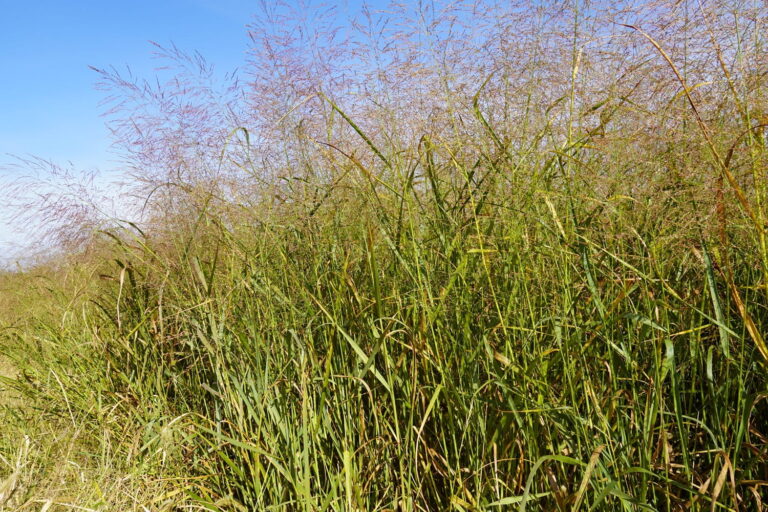
Switchgrass (Panicum virgatum) does not need to be flashy to be valuable. In habitat plantings, this native warm-season grass works quietly, building cover, stabilizing soil, filtering runoff, and providing wildlife with a stronger foundation year-round. If you are planting a meadow, field border, riparian buffer, or conservation area, switchgrass can help turn open ground into functioning habitat.
In this guide, we will cover:
Why switchgrass is useful for habitat plantings
What wildlife it supports
Where and how to plant it
What to pair it with for stronger habitat value
How to maintain it after planting
Start by looking at what switchgrass actually adds to a habitat planting.
Why Is Switchgrass Useful for Habitat Plantings?
Switchgrass (Panicum virgatum) is a perennial, warm-season grass native to most of the eastern United States. It is useful for habitat plantings because it combines structure, soil stability, wildlife cover, and long-term resilience into a single native warm-season grass. If you are building a meadow, riparian buffer, field border, or wildlife planting, switchgrass can serve as a structural anchor for the site.
What Switchgrass Adds to a Habitat Planting
Switchgrass helps habitat plantings by providing:
Dense cover: Its tall bunchgrass form creates shelter and nesting structure for ground-nesting birds.
Soil stabilization: Its extensive root system can grow five to six feet deep, helping hold soil in place.
Runoff filtration: Those deep roots can absorb nutrients such as nitrogen and phosphorus before they move into nearby waterways.
Seasonal structure: Standing stems and seedheads can continue offering cover and food value after the growing season.
That combination makes it ideal for habitat work. Switchgrass is a native species that helps shape the surrounding physical environment, especially when paired with native forbs and other warm-season grasses, and it looks great in the summer.
What Wildlife Benefits from Planting Switchgrass for Habitat?
Switchgrass and other native warm-season grasses provide necessary cover for the mating, nesting, brood-rearing, and feeding activities of ground-nesting birds, while small mammals such as mice and rabbits also thrive in this type of habitat.
Habitat Benefits by Wildlife Group
Ground-nesting birds: Switchgrass creates tall, protective cover that can support nesting and brood-rearing activity.
Small mammals: The dense growth habit gives mice, rabbits, and other small mammals cover from exposure and predators.
Pollinators and beneficial insects: Switchgrass is not primarily valuable because of nectar. Its pollinator value comes from structure. USDA NRCS notes that native grasses create protected microhabitats, offer nesting sites for ground-nesting bees and other insects, and can serve as larval host plants. NRCS specifically identifies switchgrass as a caterpillar host plant for banded skippers and satyrs.
Birds and mammals in winter: If you leave seedheads standing after flowering, switchgrass can provide a winter food source for birds and small mammals.
Pair switchgrass with native forbs to add nectar, pollen, bloom diversity, and additional wildlife value across the growing season.
Where Should You Plant Switchgrass?
Switchgrass is adaptable, but it performs best when you match it to the right site.
For habitat work, switchgrass is especially useful in sunny open sites where its height, root mass, and dense structure can support wildlife while also helping stabilize soil.
That makes it a strong candidate for native meadows, field borders, conservation plantings, pond edges, streambanks, and riparian buffer areas.
How Do You Plant Switchgrass for Habitat?
Planting switchgrass for habitat starts with site preparation. Switchgrass can be resilient once established, but new warm-season grass seedlings need help getting ahead of competing vegetation. . Switchgrass can be resilient once established, but new warm-season grass seedlings need help getting ahead of competing vegetation.
Basic Switchgrass Planting Steps
Test and prepare the soil. We recommend checking soil pH and fertility before planting. Switchgrass can tolerate a soil pH range of 5.0 to 8.0, but soils below 5.5 should be corrected with lime.
Control existing vegetation. Mowing or burning existing vegetation can encourage new growth before undesirable species are treated according to the appropriate site plan.
Protect seed-to-soil contact. No-till or minimum-till seeding can be effective for warm-season grasses, but surface residue may limit germination by preventing seed-to-soil contact, shading seedlings, or creating nitrogen deficiency as residue decomposes.
Ensure good seed-to-soil contact. Surface residues can limit germination by impeding seed-to-soil contact, smothering seedlings, or by creating nitrogen deficiency as residues decompose. Prior to planting surface residues should be removed or incorporated into the soil.
For habitat plantings, do not rush this step. A well-prepared site gives switchgrass the best chance to establish dense cover, deep roots, and provide long-term wildlife value.
What Should You Plant with Switchgrass for Better Habitat?
Switchgrass can provide excellent structure, but it should not be the only plant doing the work. For broader habitat value, pair it with native flowering perennials and other warm-season grasses that add nectar, pollen, seed, bloom diversity, and different forms of cover.
Think of switchgrass as the backbone. Then build the rest of the habitat around it.
Supports bees and butterflies, while seedheads can provide food for birds
Meadow and pollinator plantings
Switchgrass provides height, cover, and root mass, while flowering species help support pollinators across more of the growing season.
How Should You Maintain Switchgrass After Planting?
Switchgrass is low maintenance once established, but the first year is key. Your main job is to reduce weed competition while the seedlings develop enough root mass to compete on their own.
Switchgrass Maintenance Dos and Don’ts
Do:
Control weeds prior to establishment. Native warm-season grasses can struggle when perennial grasses and broadleaf weeds are not controlled before planting.
Do spring mowing prior to birds nesting in spring. This will prevent disturbance to nests when birds are nesting.
Let habitat structure stand. Leaving switchgrass stems and seedheads standing into fall and winter can preserve cover and food value for birds and small mammals.
Establishment year trimming: During the first growing season trim the meadow to half knee height when vegetation reaches knee height. There should be no trimming after 15 September.
Don’t:
Don’t use nitrogen fertilizer. Nitrogen encourages growth of weedy competition. If necessary, fertilize to get your phosphorus levels to 15 ppm, potassium to 50 ppm, and magnesium to 60 ppm.
Do spring mowing prior to birds nesting in spring. This will prevent disturbance to nests when birds are nesting.
Planting Switchgrass for Habitat Starts with Ernst Conservation Seeds
Planting switchgrass for habitat means creating structure, cover, root mass, seasonal food value, and a stronger ecological foundation for birds, small mammals, pollinators, and beneficial insects. When you pair switchgrass with native flowering perennials and other warm-season grasses, the result is a more diverse planting that can support wildlife across more of the year.
Ernst Conservation Seeds offers switchgrass, other native grasses, forbs, and habitat-focused seed mixes to help you build that kind of planting from the ground up. Browse Ernst’s seed finder and choose the species that give your habitat project deeper roots.
Quick Summary
This blog explains how planting switchgrass for habitat can help create stronger native plantings by adding structure, wildlife cover, soil stability, and seasonal food value. It also covers where switchgrass works best, how to establish and maintain it, and why pairing it with native forbs and other warm-season grasses can improve habitat value throughout the year.
FAQ
Yes. Switchgrass provides dense cover, nesting structure, winter shelter, and seedheads that can support birds, small mammals, and beneficial insects.
Switchgrass works best in sunny open sites such as meadows, field borders, riparian buffers, pond edges, streambanks, and conservation plantings. It is especially useful where habitat creation, erosion control, or runoff filtration are part of the goal.
Switchgrass can be planted by itself, but it often provides stronger habitat value when paired with native forbs and other warm-season grasses. Flowering species add nectar, pollen, bloom diversity, and additional wildlife support.