
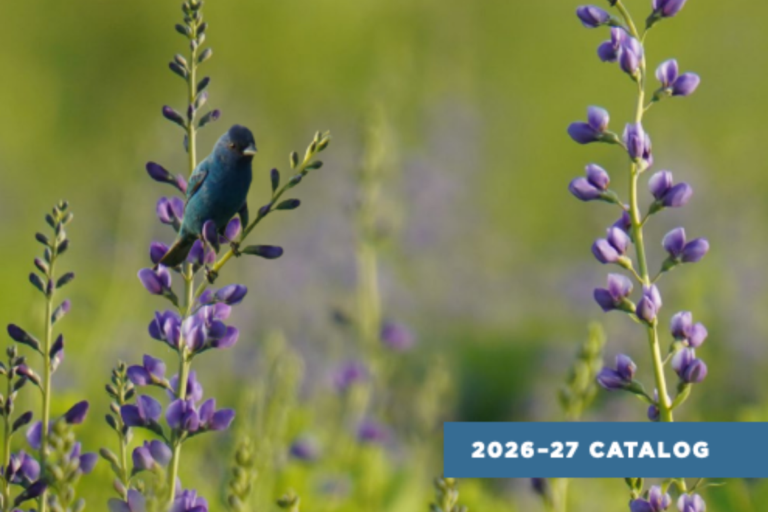
The new 2026-2027 Ernst Seed catalog is now available. Whether you’re planning a restoration project, designing a pollinator meadow, or looking for native cover crops, this catalog is your go-to resource for species selection and expert guidance.
Inside, you’ll find:
- Free access in digital or print format
- Site-specific planting guides for real-world conditions
- Hundreds of native and naturalized species with scientific details
- Practical tips from over 60 years of field-tested experience
Here’s how to get your copy, and what to expect when you open it.
Where Can I Find the New Ernst Seed Catalog?
You can access the latest Ernst Seed catalog in two convenient formats. Both are free and easy to use.
Download the PDF Instantly
The digital version is available for immediate download here. It opens as a full-color, searchable PDF that works well on desktop and mobile. Use it to search species by name, browse mixes by application, or jump directly to a section using the clickable table of contents.
- No login required
- No form to fill out
Just click and read!
Request a Printed Catalog
Prefer something you can flip through and mark up? You can also request a print copy. Fill out a short form on the catalog page, and Ernst will mail it to you at no cost.
Both formats are fully up to date with species lists, planting guides, and regional recommendations. Use whichever best suits your planning style.
What’s Included in the Ernst Seed Catalog?
The Ernst Seed catalog is a complete planning resource designed to support ecological restoration, sustainable landscaping, and native habitat creation. Here’s what you’ll find inside:
Company Mission and Background
We introduce the catalog with a message from founder Calvin Ernst and a brief company history.
These opening pages reinforce our long-standing commitment to conservation, native biodiversity, and the responsible production of high-quality seed. They also explain Ernst’s role in supplying over 200 species of native and naturalized plants across the eastern United States.
Educational Content
Early sections provide essential background for working with native species. Topics include:
- What “native” means in the context of regional ecology
- How to calculate seeding rates using Pure Live Seed (PLS)
- What to expect in years 1, 2, and 3 of meadow establishment
- Common obstacles and how to avoid them
You don’t need to guess or rely on outside sources. Our catalog provides foundational knowledge rooted in decades of on-the-ground experience.
Seed Species and Mixes
The bulk of the catalog is a comprehensive list of available species and seed mixes, organized by type and application. This includes:
- Grasses and grass-like species (e.g. Panicum virgatum, Sorghastrum nutans)
- Herbaceous flowering plants (e.g. Monarda fistulosa, Rudbeckia hirta)
- Woody shrubs and trees (e.g. Cephalanthus occidentalis, Cornus florida)
- Cover crops for soil building and erosion control
Each entry includes common and scientific names, with clear sorting and pagination for fast reference. Whether you’re restoring a wetland or designing a pollinator meadow, you’ll find the material you need.
Which Planting Guides Are Available in the Catalog?
One of the most valuable parts of the Ernst Seed catalog is its collection of site-specific planting guides. These are practical, science-backed strategies for establishing native vegetation in real-world conditions from highway slopes to backyard meadows.
Tailored to Conditions
Each guide is written for a particular site type or environmental goal. You’ll find detailed recommendations for:
- Disturbed or sloped areas prone to erosion
- Wetlands, riparian buffers, and stormwater basins
- Partially shaded sites or forest openings
- Uplands & Meadows
- Pollinator-friendly sites
Each guide accounts for soil type, sun exposure, slope, and moisture levels, helping you select native species that will take root and persist.
Designed Around Purpose
Beyond site conditions, some guides focus on outcomes:
- Pollinator habitat creation
- Wildlife food plots
- Biomass or forage production
- Utility right-of-way sites
- Reclamation or conservation compliance
If you’re unsure what mix is right for your site, this is the place to start.
Who Benefits Most from Using the Ernst Seed Catalog?
The Ernst Seed catalog is accessible to anyone with land to restore, conserve, or beautify using native species. Whether you manage acres or a single backyard, you’ll find tools tailored to your goals.
Farmers and Landowners
If you’re looking to stabilize slopes, prevent erosion, or rotate in cover crops, our catalog offers:
- Seed mixes for biomass, forage, and seasonal groundcover
- Wildlife food plots designed to support deer, upland birds, and pollinators
- Tips for managing large-acreage plantings in various soil types
Landscape Architects and Restoration Professionals
Our catalog simplifies complex project planning by linking species and mixes to:
- Site-specific guides for stormwater, pollinator, or riparian plantings
- Technical data like PLS, mix components, and regional adaptability
- A wide native inventory to support large-scale, ecologically sound designs
Gardeners and Conservation Volunteers
Smaller-scale projects benefit from the same depth of expertise. You’ll find:
- Mixes for pollinator strips, meadow patches, or lawn conversions
- Easy-to-follow establishment guides
- Low-minimum order thresholds, making even small gardens viable for native restoration
Every user group can plan more confidently with the catalog as a foundation.
Why Is the Ernst Seed Catalog More than a Product List?
The Ernst Seed catalog is a technical guide backed by decades of native plant expertise.
Built on 60 Years of Field Experience
The recommendations you’ll find throughout the catalog aren’t theoretical. They come directly from field trials, reclamation projects, and habitat restorations carried out across the eastern U.S. That experience translates into practical, reliable advice on everything from erosion control to pollinator support.
Transparent, Data-Rich Listings
Every species and mix includes its scientific name, common name, and, when applicable, application notes, seeding rates, and site tolerances. Species are organized for clarity, so you can search by type (e.g. Elymus virginicus vs. Asclepias syriaca) or habitat goal.
Emphasis on Stewardship
More than anything, the catalog reflects our commitment to ecological health. It’s a resource for professionals and stewards alike that’s meant to inform real decisions, not just enable purchases.
Plan Your Project with the Ernst Seed Catalog
The Ernst Seed catalog is a planning companion rooted in ecological expertise. From access options and educational content to tailored planting guides and species listings, this catalog supports sound decision-making at every scale.
Get your free copy today and start your next restoration or landscaping project with confidence. [Link to catalog]
Quick Summary
The new Ernst Seed catalog is now available in digital and print formats. It offers expert planting guides, native species listings, and practical advice for landowners, conservationists, and professionals. This blog outlines what’s inside and how to access it.
Ernst Seed Catalog FAQ
Q1: Is the Ernst Seed catalog free?
Yes, both the digital PDF and printed version are available at no cost through the Ernst website.
Q2: Can I use the catalog if I’m a home gardener?
Absolutely. The catalog includes small-scale recommendations, pollinator mixes, and beginner-friendly guides.
Q3: Does the catalog include planting advice?
Yes, it features site-specific guides and best practices for establishing native vegetation in various conditions.