
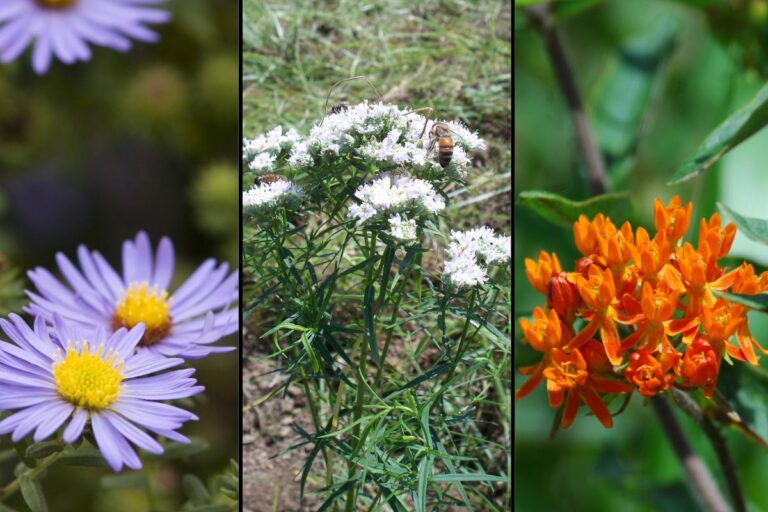
Pollinator-friendly landscapes do not have to be tall, tangled, or hard to manage. With the right short-growing native wildflowers, you can create a compact planting that supports bees, butterflies, and beneficial insects while still fitting neatly into gardens, meadow edges, walkways, residential yards, and designed landscapes.
Pollinator-friendly landscapes do not have to be tall, tangled, or hard to manage. With the right short-growing native wildflowers, you can create a compact planting that supports bees, butterflies, and beneficial insects while still fitting neatly into gardens, meadow edges, walkways, residential yards, and designed landscapes.
In this guide, we’ll cover:
- What makes a native wildflower both compact and pollinator-friendly
- Early, summer, and fall-blooming species to consider
- How to choose plants that support season-long pollinator activity
- Practical planting tips for better establishment
Before choosing specific species, it helps to define what “short-growing” really means in a functional native planting.
What Makes a Native Wildflower “Short-Growing” and Pollinator-Friendly?
The best short-growing native wildflowers stay compact without sacrificing ecological value. For this guide, that generally means native flowering plants that mature around 1 to 3 feet tall while still providing nectar, pollen, habitat, or host-plant benefits for pollinators.
Low-growing and compact native flowers are easier to place near walkways, garden borders, meadow edges, residential yards, solar sites, and other areas where clear sight lines matter. They can bring the color and ecological function of a native meadow into spaces that need a more controlled, intentional look.
For a plant to earn a spot in a pollinator-friendly landscape, strong candidates should offer:
- Manageable mature height
- Regional native value
- Nectar, pollen, or host-plant support
- Usefulness in real landscape settings
- Availability through Ernst Conservation Seeds
In other words, short-growing native wildflowers should solve two problems at once: they should fit the landscape physically, and they should help sustain the bees, butterflies, and beneficial insects that depend on native plant communities.
Which Short-Growing Native Wildflowers Bloom Early in the Season?
Golden Alexanders and Hairy Beardtongue are two of the best short-growing native wildflowers for early-season pollinator support. Both stay compact, bloom before many summer meadow species reach their peak, and help fill the spring-to-summer gap when bees and butterflies need reliable food sources.
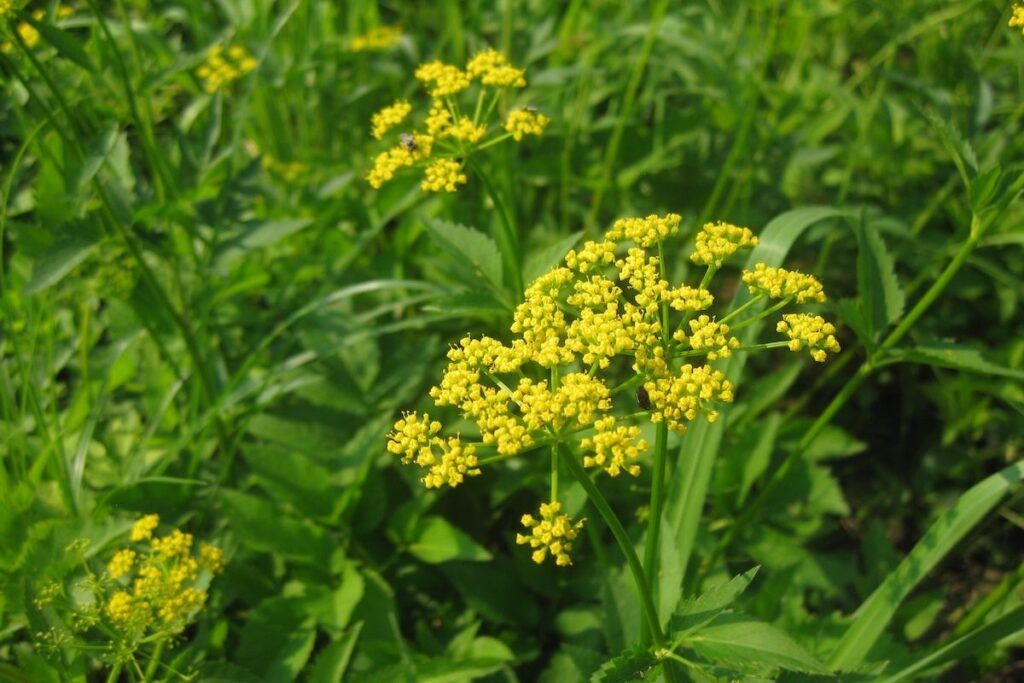
Golden Alexanders
Golden Alexanders (Zizia aurea) are especially useful because they are one of the earliest blooming herbaceous species. At roughly 2.6 feet tall, with bright yellow flowers that can appear before many other native wildflowers are ready to open, they bring strong pollinator value without creating a tall visual barrier.
It is also a flexible plant for real landscapes. Golden Alexanders can work in pollinator meadows, rain gardens, riparian areas, and transition zones where conditions may shift between sun, shade, moist soil, and drier stretches.
Hairy Beardtongue
Hairy Beardtongue (Penstemon hirsutus) adds another compact option for late spring into early summer. These typically grow to about 2.8 feet and form upright clumps, making it easier to use in designed plantings, meadow edges, and rocky or well-drained sites.
Together, these two early bloomers give compact pollinator plantings a stronger start. They help bridge the season before summer standouts like Butterfly Milkweed and Narrowleaf Mountainmint begin drawing heavier pollinator traffic.
What Are the Best Short-Growing Native Wildflowers for Summer Pollinators?
Some of the best short-growing native wildflowers for summer pollinators are Lanceleaf Coreopsis, Butterfly Milkweed, and Narrowleaf Mountainmint. Together, they provide color, nectar, pollen, and habitat value during the busiest part of the growing season.
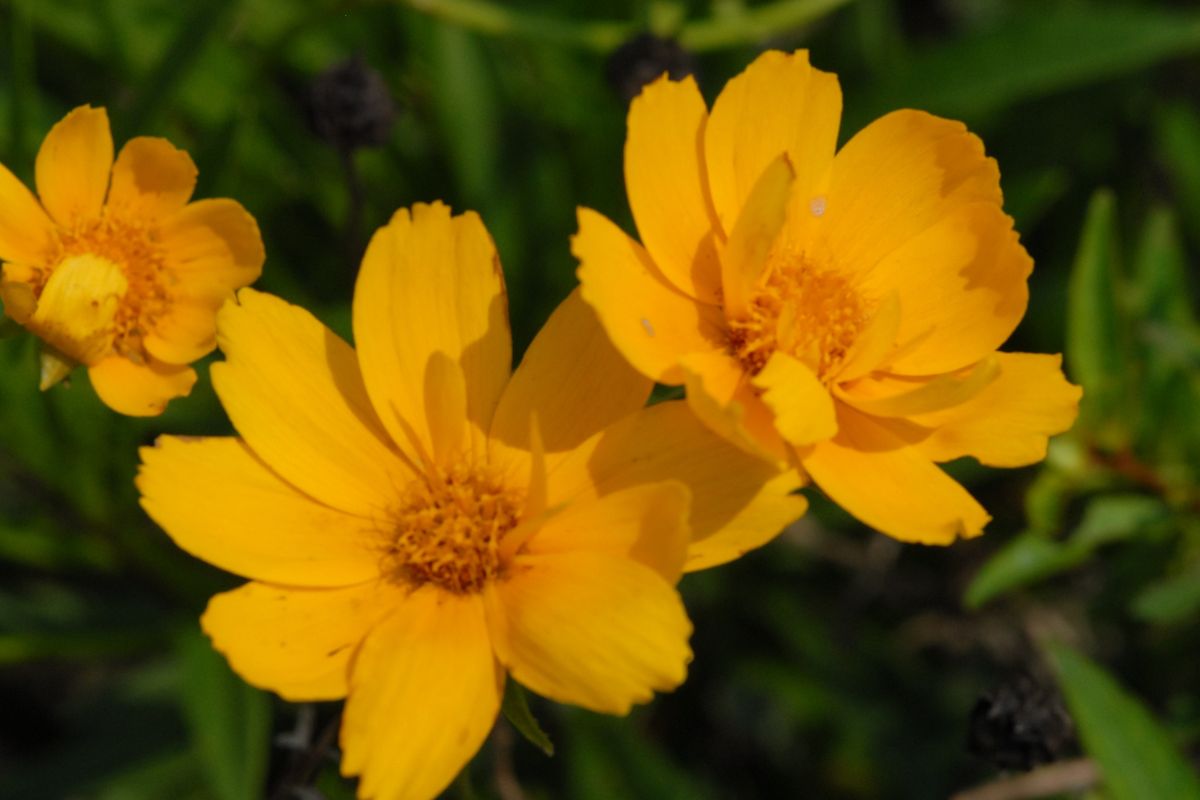
Lanceleaf Coreopsis
Lanceleaf Coreopsis (Coreopsis lanceolata) is a strong choice for sunny, lower-input landscapes where visibility and color both matter. At roughly 2.4 feet tall, it is compact enough for meadow edges, roadsides, garden borders, and other open sites. Its bright yellow flowers are easy to appreciate from a design standpoint, while still supporting bees, butterflies, and other beneficial insects.
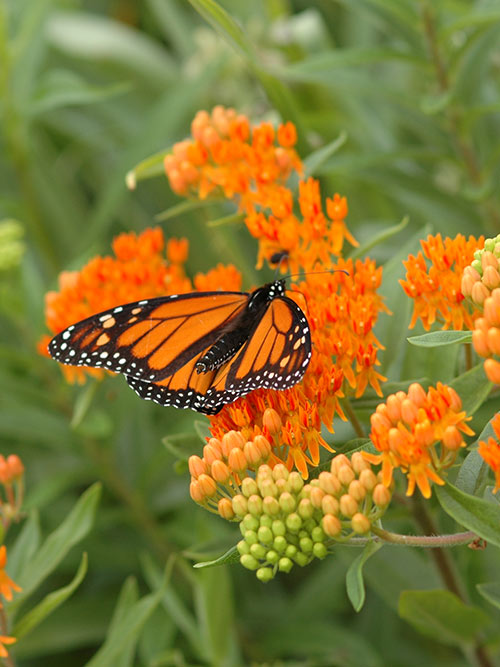
Butterfly Milkweed
Butterfly Milkweed (Asclepias tuberosa) is one of the most recognizable native plants for pollinator-friendly landscapes. Its orange flowers provide nectar for a range of native bees and butterflies, while its leaves serve as a host plant for monarch caterpillars.
Butterfly Milkweed does best in full sun and well-drained soils. It is a standout plant, but it should still be part of a diverse native planting rather than used alone.
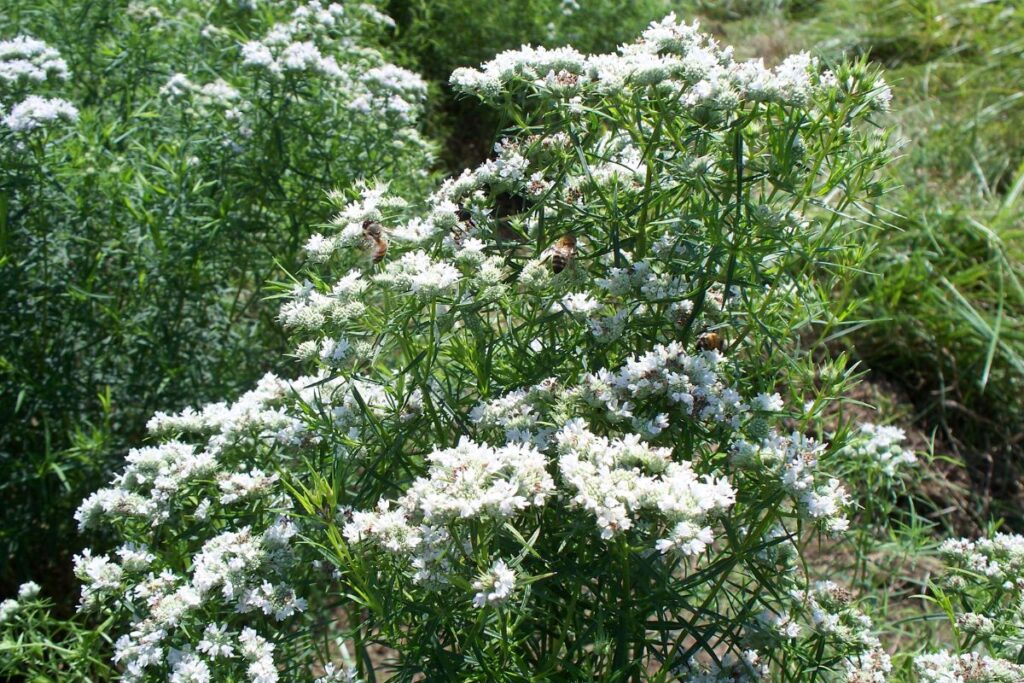
Narrowleaf Mountainmint
Narrowleaf Mountainmint (Pycnanthemum tenuifolium) may be less flashy, but it is one of the strongest pollinator performers in this group. Its small white flowers can attract native bees, bumblebees, honey bees, butterflies, and other beneficial insects.
For a quick planning shortcut:
- Best color impact: Lanceleaf Coreopsis
- Best monarch support: Butterfly Milkweed
- Best all-around pollinator traffic: Narrowleaf Mountainmint
- Best dry-site option: Butterfly Milkweed or Lanceleaf Coreopsis
- Best meadow massing plant: Narrowleaf Mountainmint
Which Short-Growing Native Wildflowers Extend Bloom Into Fall?
Aromatic Aster is one of the best short-growing native wildflowers for late-season pollinator support. It stays compact, blooms deep into the growing season, and helps sustain pollinators after many summer wildflowers have faded.
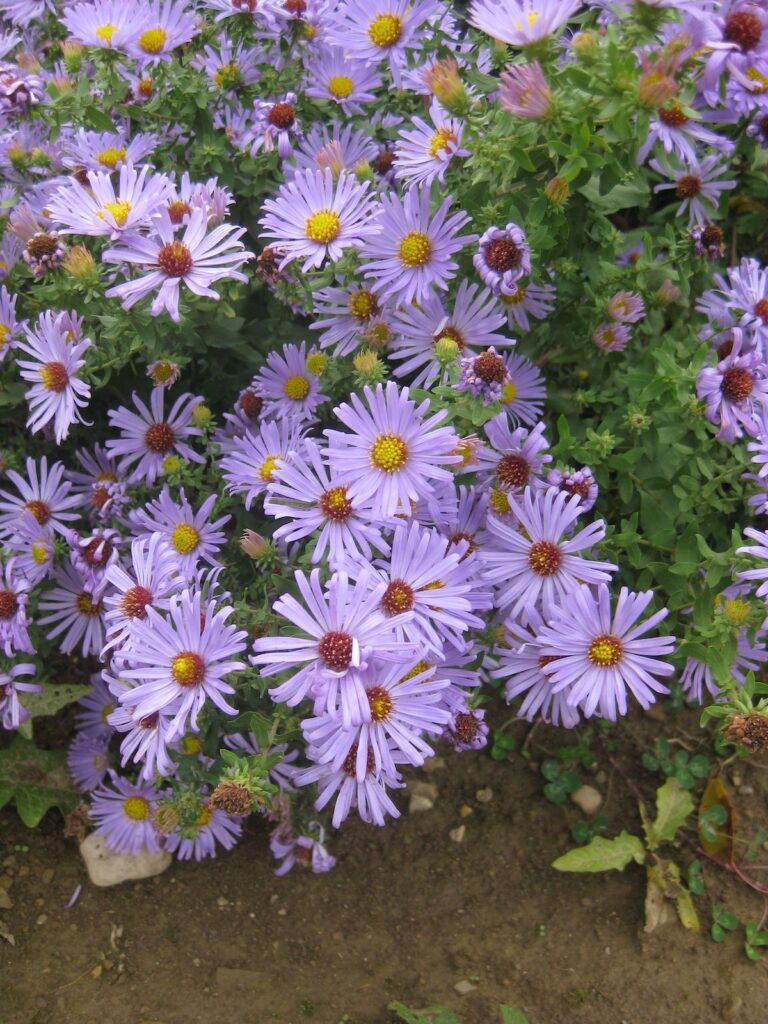
Aromatic Aster
Aromatic Aster (Symphyotrichum oblongifolium) is especially valuable because of its timing. Its purple flowers can bloom from mid-August into late October or early November, giving bees, butterflies, and other beneficial insects an important food source near the end of the season.
That late bloom window makes Aromatic Aster useful in residential meadows, pollinator borders, designed landscapes, and other spaces where compact growth is important. It can help carry a planting visually and ecologically into the fall without overwhelming shorter neighboring species.
For an even stronger habitat benefit, avoid cutting everything back immediately after bloom. Leaving some standing stems through winter can provide shelter and nesting structure for native insects.
What Should You Know Before Planting Short-Growing Native Wildflowers?
Short-growing native wildflowers are easier to manage when the site is prepared well from the start. Good establishment depends on reducing weed pressure, planting at the right depth, and giving native perennials time to develop strong roots.
Start by removing or suppressing existing vegetation before seeding. Native seedlings often grow slowly at first, so early competition from weeds can make establishment harder. A clean, well-prepared seedbed gives your planting a better chance to fill in over time.
Keep these basics in mind:
- Prepare the site before seeding. Control weeds and competing vegetation first.
- Plant shallow. Many native seeds should not be buried deeply.
- Create firm seed-to-soil contact. Seed needs contact with the soil surface to germinate well.
- Be patient. Many native perennials focus on root growth in the first season.
- Avoid unnecessary fertilizer. Added fertility can encourage weeds instead of native wildflowers.
With the right preparation, compact native wildflowers can become a durable, low-maintenance foundation for pollinator-friendly landscapes year-round.
Grow Better Pollinator Habitat With Short-Growing Native Wildflowers From Ernst
Short-growing native wildflowers can deliver big ecological value in a manageable footprint. By combining early bloomers like Golden Alexanders and Hairy Beardtongue, summer standouts like Lanceleaf Coreopsis, Butterfly Milkweed, and Narrowleaf Mountainmint, and fall support from Aromatic Aster, you can build a compact landscape that feeds pollinators across the growing season.
The key is choosing plants that match your site, your design goals, and the wildlife you want to support. To find native wildflowers that fit your project, explore Ernst Conservation Seeds’ Seed Finder Tool and start narrowing the field, literally and botanically.
Quick Summary
Short-growing native wildflowers help create compact, pollinator-friendly landscapes that support bees, butterflies, and beneficial insects without overwhelming walkways, garden borders, meadow edges, or residential spaces. By choosing species with staggered bloom times, such as Golden Alexanders, Butterfly Milkweed, Narrowleaf Mountainmint, and Aromatic Aster, landowners can provide season-long nectar, pollen, habitat, and host-plant value in a manageable planting.
Short-Growing Native Wildflowers FAQ
Short-growing native wildflowers are compact native flowering plants that generally mature around 1 to 3 feet tall. They are useful for pollinator-friendly landscapes where visibility, neatness, and manageable growth matter.
Strong options include Golden Alexanders, Hairy Beardtongue, Lanceleaf Coreopsis, Butterfly Milkweed, Narrowleaf Mountainmint, and Aromatic Aster. Together, these species can support pollinators from spring through fall.
Start with strong site preparation by reducing weeds and creating good seed-to-soil contact. Many native perennials grow slowly at first, so patience and early weed control are important.